Docker Images and Leaked Secrets: Container Security Risks
If you’re deploying applications with Docker, there’s a good chance you’ve accidentally baked a secret into an image at some point.
If you’re deploying applications with Docker, there’s a good chance you’ve accidentally baked a secret into an image at some point.
If you run a business in 2025, data breaches are not some abstract threat that only happens to big corporations.
If you run a business or handle any kind of sensitive data, there is something you need to know about.

If you run a business of any size, you probably spend a decent amount on firewalls, endpoint protection, and monitoring tools.
If you run a business that takes data security seriously, you probably already know that leak monitoring is not optional anymore.
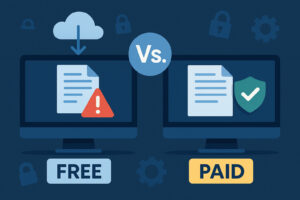
If you’re running a business online, you’ve probably wondered whether those free data leak monitoring tools are enough, or if you should actually pay for proper monitoring.
When your company’s source code ends up on GitHub, a public repository, or worse – on the dark web – it’s not just an embarrassing security incident.
If you’re handling personal data of EU residents, you’re already familiar with the weight of GDPR compliance.
When sensitive company data appears where it shouldn’t be, every minute counts.

If you’re running a business with any kind of digital infrastructure, you need to understand this: your configuration files are probably the most dangerous things you could ever accidentally make …

When your company’s credentials end up in the wrong hands, it’s not just about unauthorized access anymore.

Data breaches don’t announce themselves politely.
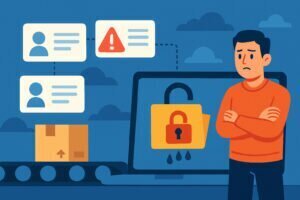
You’ve locked down your own systems, trained your staff, and implemented strong security policies.
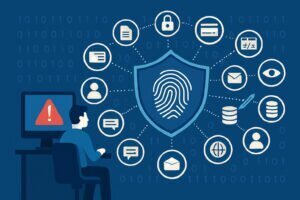
When I first started monitoring for data leaks, I made the classic mistake of focusing on just a few obvious sources.
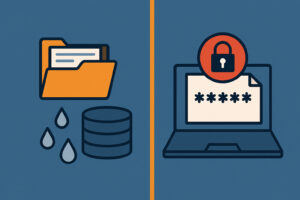
If you’ve ever received a notification about your data being compromised, you might have wondered whether it was a leak or a breach.
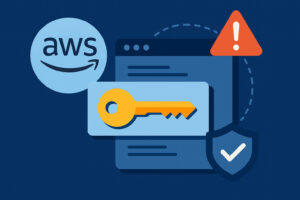
If you’re using AWS services in your development workflow, there’s a very real chance you’ve either accidentally committed credentials to a public repository or you’re about to.
If you’re responsible for your company’s security, you’ve probably lost sleep wondering whether your data is already compromised without your knowledge.
If you’re using Slack for team communication, there’s a good chance you’re sharing more than you think.
When a customer’s personal information gets exposed, whether through a breach, misconfiguration, or employee error, the clock starts ticking immediately.
If you’ve ever wondered whether your email address or password has been exposed in a data breach, you’re not alone.
Your company’s source code represents years of development work, competitive advantages, and trade secrets worth millions.

I’ll be honest with you – the first time I realized one of my client’s credentials had leaked online, I found out about it three weeks too late.
If you’ve ever wondered whether your company’s sensitive information might be floating around on dark web forums or underground marketplaces, you’re not alone.
If you run a small business, you might think cybercriminals aren’t interested in you.

When most companies think about data breaches, they picture hackers breaking through firewalls or ransomware attacks.

If you’re relying on manual checks to spot data leaks, you’re already behind.
If you’re a developer or run any kind of online service, chances are you’ve worked with API keys at some point.

Finding out that your employees’ email addresses have been exposed in a data breach is one of those situations that makes your stomach drop.
Most people think the dark web is just a place where criminals hang out.

When you first hear about a data breach, the conversation usually centers on immediate costs.
If you’re responsible for your company’s digital security, you need to understand something crucial: right now, there’s probably sensitive information about your organization sitting on a Pastebin site somewhere.
Let me tell you something that keeps security teams up at night: your company’s credentials are probably sitting somewhere on GitHub right now.
Let me tell you something that kept me up at night a few years back.
Your smartphone probably knows more about you than your closest friend.
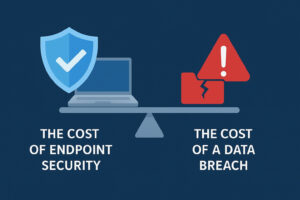
I’ve had this conversation more times than I can count.
Choosing endpoint protection software isn’t just about ticking boxes on a feature list.
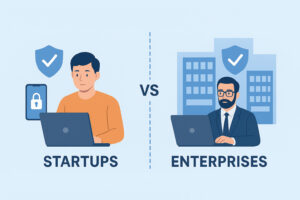
When I first started consulting for both startups and large enterprises, I made the mistake of thinking endpoint security was basically the same for everyone.
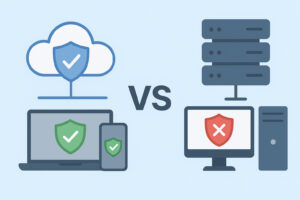
If you’re responsible for keeping your company’s devices secure, you’ve probably wrestled with this question: should you go with cloud-managed endpoint security or stick with on-premise solutions?

If you work in financial services, you already know the stakes are higher for you than almost anyone else.

Healthcare organizations handle some of the most sensitive information imaginable.
If you handle personal data of EU citizens, you already know that GDPR compliance isn’t optional.

Choosing the right endpoint security solution can feel overwhelming.
Data breaches have become one of the most costly security incidents that businesses face today.
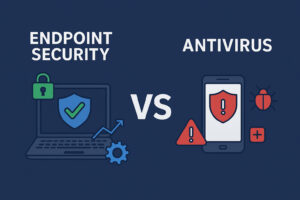
When I first started working with cybersecurity solutions, I thought antivirus software was pretty much all you needed.
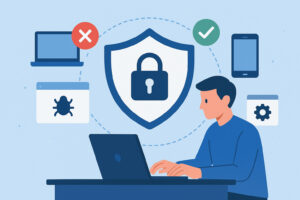
I still remember the Monday morning when one of our client’s employees clicked on what looked like a legitimate invoice email.
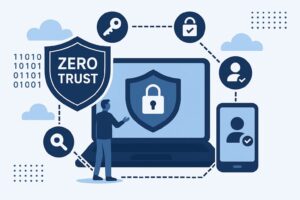
Remember when we used to think of corporate networks like castles?
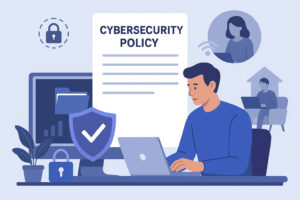
The shift to remote and hybrid work has fundamentally changed how we approach cybersecurity.
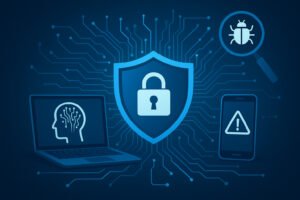
The cybersecurity landscape has changed dramatically over the past few years.

I’ll be honest – I used to be one of those people who clicked ”remind me later” on security updates.
When organizations pursue ISO 27001 certification, they often focus on policies, documentation, and risk assessments.
Remote work has changed everything about how we think about cybersecurity.
In today’s digital landscape, our laptops and smartphones have become prime targets for cybercriminals.
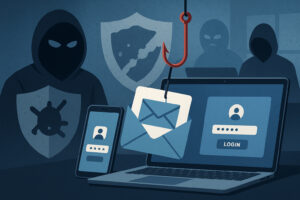
Phishing attacks have become increasingly sophisticated, and despite billions invested in traditional security infrastructure, they continue to slip through the cracks.
The workplace has transformed dramatically over the past few years.
The way we work has changed dramatically over the past few years, and nowhere is this more evident than in how we use mobile devices.
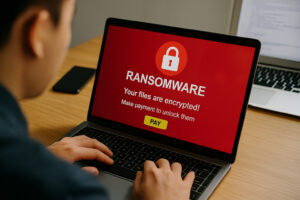
Picture this: Sarah from accounting clicks on what looks like an invoice from a familiar vendor.
When I first started working with small businesses on their cybersecurity needs, I was surprised by how many owners thought their company was ”too small to be a target.”